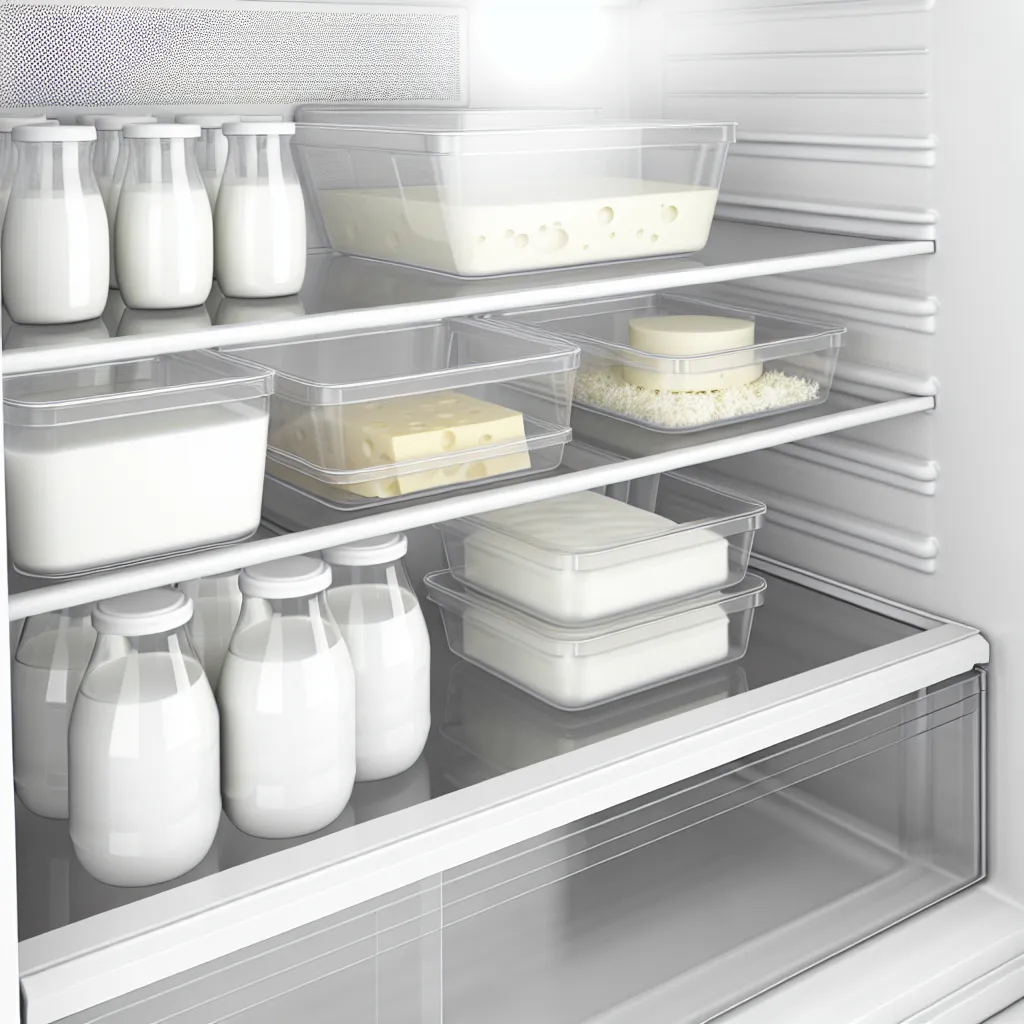
Dairy products are among the most temperature-sensitive items in your refrigerator. Proper storage not only extends their shelf life but also maintains flavor, texture, and nutritional value while ensuring food safety.
Optimal Temperature for Dairy
Dairy products require consistent cold temperatures to remain fresh. The ideal storage temperature is between 34°F and 38°F (1°C to 3°C). Temperature fluctuations are the enemy of dairy freshness, which is why placement in your refrigerator matters.
🌡️ Temperature Tip
Never store dairy products in the refrigerator door. The door experiences the most temperature fluctuation every time you open it. Always store dairy on interior shelves where temperature remains most consistent.
Milk Storage

Best Practices
- Store milk on the middle or lower shelf, never on the door
- Keep milk in its original container - commercial containers are designed for optimal preservation
- Always seal containers tightly after each use
- Place newer milk behind older milk to ensure first-in-first-out rotation
- Avoid storing milk near strong-smelling foods as it can absorb odors
Shelf Life
| Milk Type | Unopened | Opened |
|---|---|---|
| Whole Milk | 5-7 days past date | 5-7 days |
| Skim/Low-fat Milk | 7 days past date | 7 days |
| Ultra-pasteurized | 30-90 days | 7-10 days |
| Plant-based Milk | 7-10 days past date | 7-10 days |
Cheese Storage
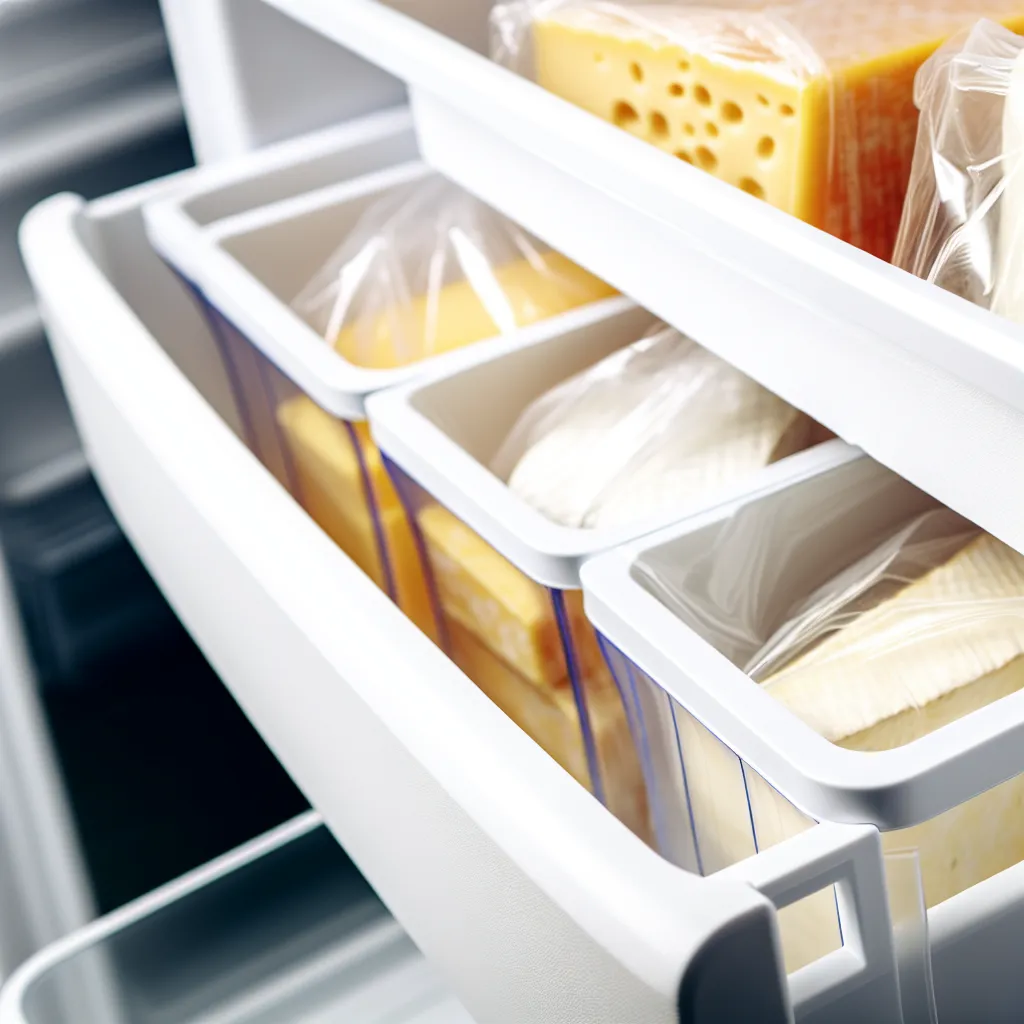
Cheese is one of the more complex dairy products to store correctly because different types have different needs.
Hard Cheeses (Cheddar, Parmesan, Gruyère)
- Wrap in wax paper or parchment paper, then loosely in plastic wrap or place in a container
- Wax paper allows cheese to breathe while preventing it from drying out
- Store in a dedicated cheese drawer if available, or in a container on a middle shelf
- Hard cheeses can last 3-4 weeks when properly stored
Soft Cheeses (Brie, Camembert, Fresh Mozzarella)
- Keep in original packaging until opened
- Once opened, wrap in wax paper and store in an airtight container
- Use within 1-2 weeks for best quality
- Fresh mozzarella in brine should remain in its liquid
Shredded Cheese
- Keep in original resealable bag
- Squeeze out excess air before sealing
- Use within 5-7 days of opening for best quality
- Consider freezing if not using within a week
Yogurt and Sour Cream
These cultured dairy products are relatively stable but still require proper storage:
- Store on middle shelves where temperature is most consistent
- Keep lids tightly sealed to prevent surface moisture and contamination
- Never eat directly from the container - use clean spoons to prevent bacterial introduction
- Yogurt can last 1-2 weeks past the date if unopened and properly stored
- Sour cream lasts about 1-2 weeks after opening
💧 Liquid Separation
If you see liquid on top of yogurt or sour cream, don't worry! This is whey, a natural byproduct. Simply stir it back in - it's perfectly safe and actually nutritious.
Butter Storage
Butter is more forgiving than other dairy products due to its high fat content:
- Store in the butter compartment or on a middle shelf
- Keep wrapped to prevent absorption of refrigerator odors
- Salted butter lasts longer than unsalted (1-2 months vs. 2-3 weeks)
- For longer storage, freeze butter in its original packaging for up to 6 months
Common Dairy Storage Mistakes
Mistake #1: Door Storage
The refrigerator door is convenient but experiences the most temperature variation. This significantly shortens dairy shelf life.
Mistake #2: Leaving Containers Open
Even briefly leaving dairy containers open exposes them to warmer air and potential contamination. Always close immediately after use.
Mistake #3: Cross-Contamination
Using the same spoon for multiple products or double-dipping introduces bacteria that can cause premature spoilage.
Mistake #4: Ignoring Dates
While dates are guidelines rather than hard rules, they provide useful reference points. Trust your senses, but respect the dates.
Signs of Spoilage
Know when to discard dairy products:
- Milk: Sour smell, chunky texture, yellowing
- Cheese: Mold on soft cheese (discard), unexpected sliminess, strong ammonia smell
- Yogurt: Mold, excessive liquid, off smell
- Butter: Rancid smell, yellow-brown discoloration
✓ Hard Cheese Mold Exception
If hard cheese develops surface mold, you can cut away the moldy portion plus an inch around it. The rest is safe to eat. Never do this with soft cheeses - mold penetrates throughout.
Organizing Your Dairy Zone
Create a dedicated dairy zone in your refrigerator:
- Designate one section of a middle shelf exclusively for dairy
- Use a clear bin or tray to contain all dairy products
- Arrange by expiration date with oldest in front
- Keep frequently used items toward the front for easy access
- Maintain separation from strong-smelling foods
With proper storage techniques, you can significantly extend the life of your dairy products while maintaining peak flavor and safety. These practices quickly become second nature and pay dividends in reduced waste and better-tasting dairy.